A hundred million years of partnership — now under threat
Bees are not a detail of the landscape; they are its architects. Here is how they came to be, how we learned to keep them, and why the South West's pollinators now depend on what we do with the land around us.
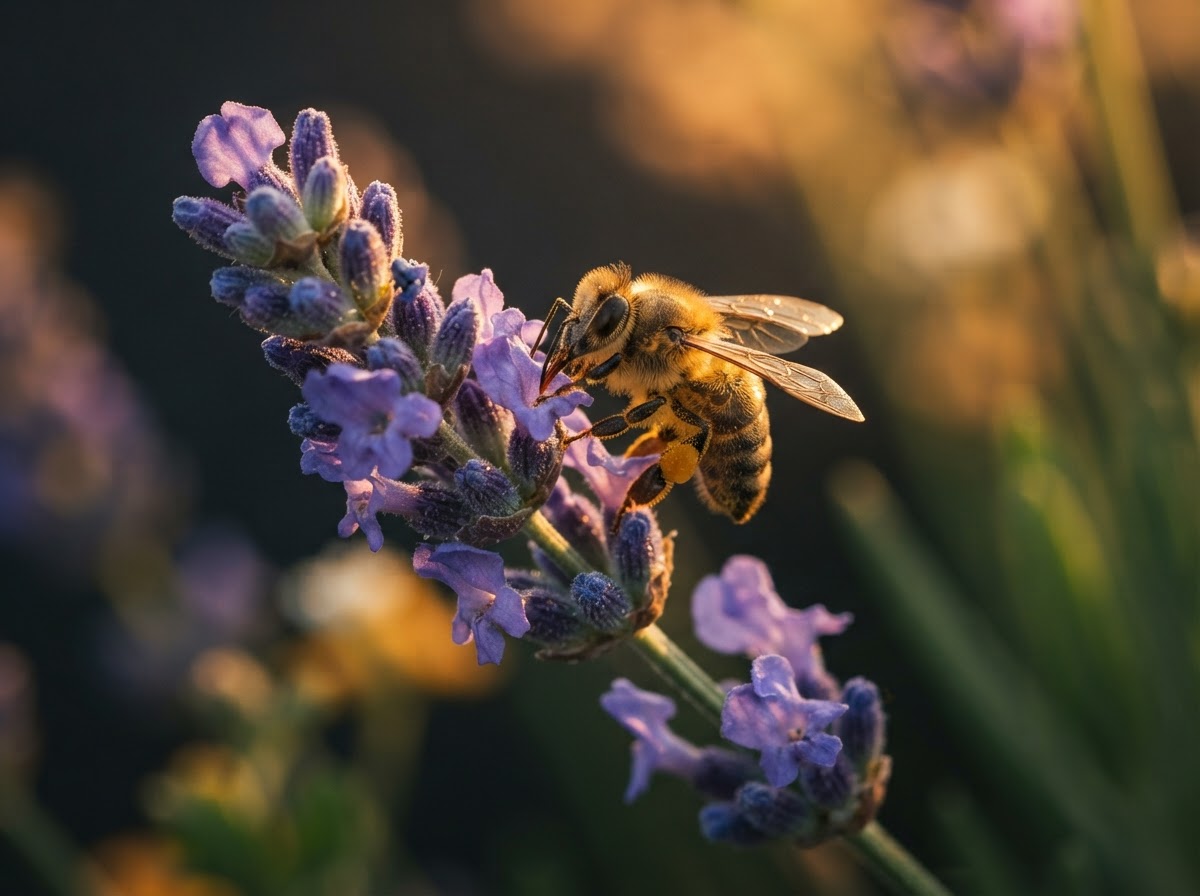
Why bees matter
Around one in three mouthfuls of the food we eat depends on pollinators. Apples, berries, beans, courgettes, oilseed rape and countless wildflowers rely on bees to set their fruit and seed.
Bees pollinate an estimated 1,500 crop and wild plant species in the UK alone. Without them, meadows thin, hedges fail to fruit, and the wider food web — from songbirds to small mammals — goes hungry.
A short history of bees
The first buzz
Bees evolved from hunting wasps as flowering plants emerged. Instead of prey, they began gathering pollen and nectar — forging a partnership that would shape nearly every terrestrial ecosystem on Earth.
Domestication begins
Humans in the Middle East and Egypt began keeping bees in clay hives. Honey was medicine, preservative, and currency — the first domesticated insect.
The movable-frame hive
L.L. Langstroth's discovery of 'bee space' let beekeepers harvest honey without destroying the colony. Modern beekeeping — and the honey industry — was born.
The great vanishing
Intensive farming and pesticides erased 97% of the UK's wildflower meadows. Wild bee populations collapsed. Today, over a third of the UK's ~270 bee species are in decline.
A network for the South West
SWBees responds by turning unused land back into habitat — connecting fragments of forage and nesting space so pollinators can move, feed, and recover.
Three kinds of bee, three kinds of home
Honeybees (Apis mellifera)
Social, colony-living, and the species beekeepers keep. A single colony can number 50,000 bees and pollinate a wide forage range.
Bumblebees (Bombus spp.)
Fuzzy, social, and the only bees that buzz-pollinate tomatoes and courgettes. The South West is home to most of the UK's bumblebee species.
Solitary bees (~250 spp.)
The quiet majority — mining, mason, and leafcutter bees. They nest in soil, hollow stems and bee hotels, and are exceptionally gentle.
See the numbers behind the decline
How the South West's pollinators are faring — and where the data comes from.
The Decline